
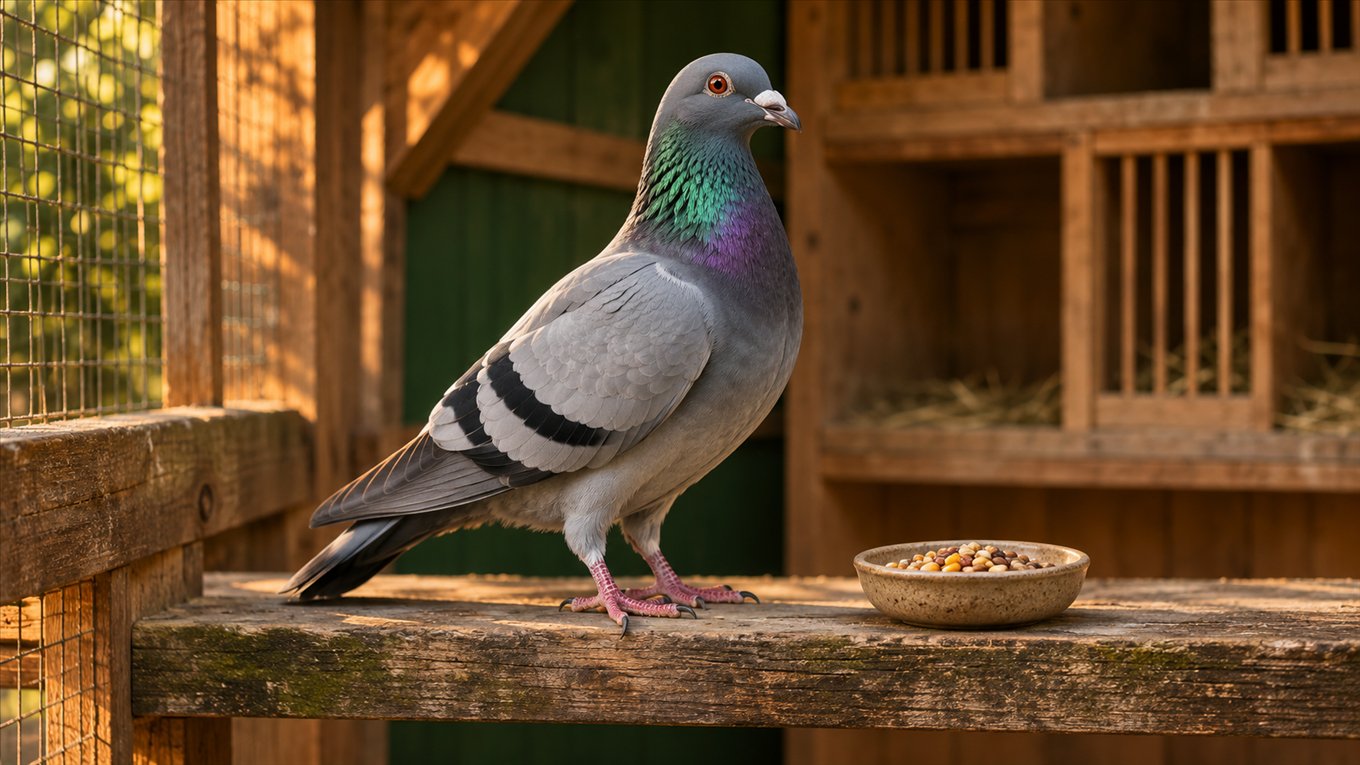
Moulting replaces worn plumage. For the fancier, it is a time to observe birds carefully and review their feeding programme. Instead of searching for one “feather” supplement, consider the whole ration, feed quality, water and conditions in the loft. A suitable programme responds to the flock’s current needs without randomly increasing portions or combining many products.
Why plan separately for moulting?
Feathers contribute to flight, body protection and insulation. Moulting is natural, but its progress should be considered alongside age, season and the bird’s condition. Unusual moulting or abnormal feather growth needs investigation; changing feed cannot replace an examination. Source: VCA, Molting in Birds.
Begin with a flock record. Which birds have started replacing feathers? Are they eating normally? Can they reach feeders without disturbance? Which groups are still training? These questions help separate feeding decisions from other matters requiring attention.
Protein and amino acids: assess the whole ration
Feathers are protein structures, so their formation requires amino acids. Both the quantity of protein and its composition and availability matter. Research on poultry feather growth discusses sulphur-containing amino acids such as methionine and cysteine, alongside vitamins and minerals. Those findings should not be turned into universal dosages for racing pigeons. Source: Molecular Signaling and Nutritional Regulation in the Context of Poultry Feather Growth and Regeneration.
What does this mean when choosing feed?
First check what the manufacturer actually declares. Distinguish a grain list from a nutritional analysis. The presence of several seeds does not establish the levels of every amino acid. If the product page lacks that information, ask the supplier or a specialist rather than relying on an unrelated table found online.
Avoid assuming that more protein is always better. The aim is to match the entire programme to the birds. Before adding a concentrate or supplement, account for the base feed and other additions, particularly where several products contain the same nutrients.
Energy, fats, vitamins and minerals
Meeting energy needs remains relevant during moulting. Protein is only one part of the ration, and oilseeds cannot replace all other components. Appropriate vitamin and mineral proportions matter too. Their selection should follow an assessment of the diet, rather than the number of claims on a package.
Make a simple inventory: list the base feed, every supplement and how often each is used. Check for overlapping products. If an ingredient list is unavailable, postpone judging the combination until you obtain it. This record supports a useful consultation and reduces impulsive buying decisions.
Comparing available mixtures
Start with the intended use stated in the description, then compare ingredients and feeding instructions. Check whether the manufacturer describes a mixture that forms part of a programme or a feed declared as complete. Do not infer completeness from words such as “premium”, “condition” or “plumage”.
The Prestige S Grains range includes Super Diet / Condition and Plumage. Its product page describes a diet and conditioning mixture without maize or pulses and lists ingredients including safflower, dari, rice, hempseed and linseed. It does not provide a complete amino-acid balance. We therefore do not present it as a standalone, complete solution for moulting. Assess its place in the overall feeding plan.
Fresh water and clean drinkers
Include water checks in the daily loft routine. Check drinker availability and cleanliness and whether every pigeon can use them. Fresh water and observation of actual feed intake are basic parts of pigeon care. Source: VCA, Feeding Pigeons and Doves.
Do not use the drinker to combine supplements indiscriminately. Follow the manufacturer’s instructions for any product administered in water and discuss the overall programme with a specialist. Record what was given and when, so another carer does not accidentally repeat it.
Common mistakes during moulting
- Observing only from a distance. Assess individual birds and access to feeders rather than relying on the most active group.
- Changing the whole programme suddenly. Record adjustments and observations so their effects can be followed.
- Overlooking feed condition. Inspect the bag and grain when opening each batch. Protect stored feed from moisture and contamination.
- Replacing diagnosis with a supplement. Brittle or abnormally growing feathers may need veterinary assessment rather than another product.
- Failing to share information. Where several people feed the birds, use one written plan instead of incomplete verbal instructions.
Consistency rather than haste
Review moulting progress, appetite and changes once a week. Note questions arising during observation. Photographs taken in similar conditions may support a discussion with a specialist, but cannot replace examining the bird.
When exploring the Prestige S Grains range, follow confirmed product uses and your own birds’ needs. Feeding during moulting is about consistent, planned care, without promises to accelerate a natural process at any cost.