

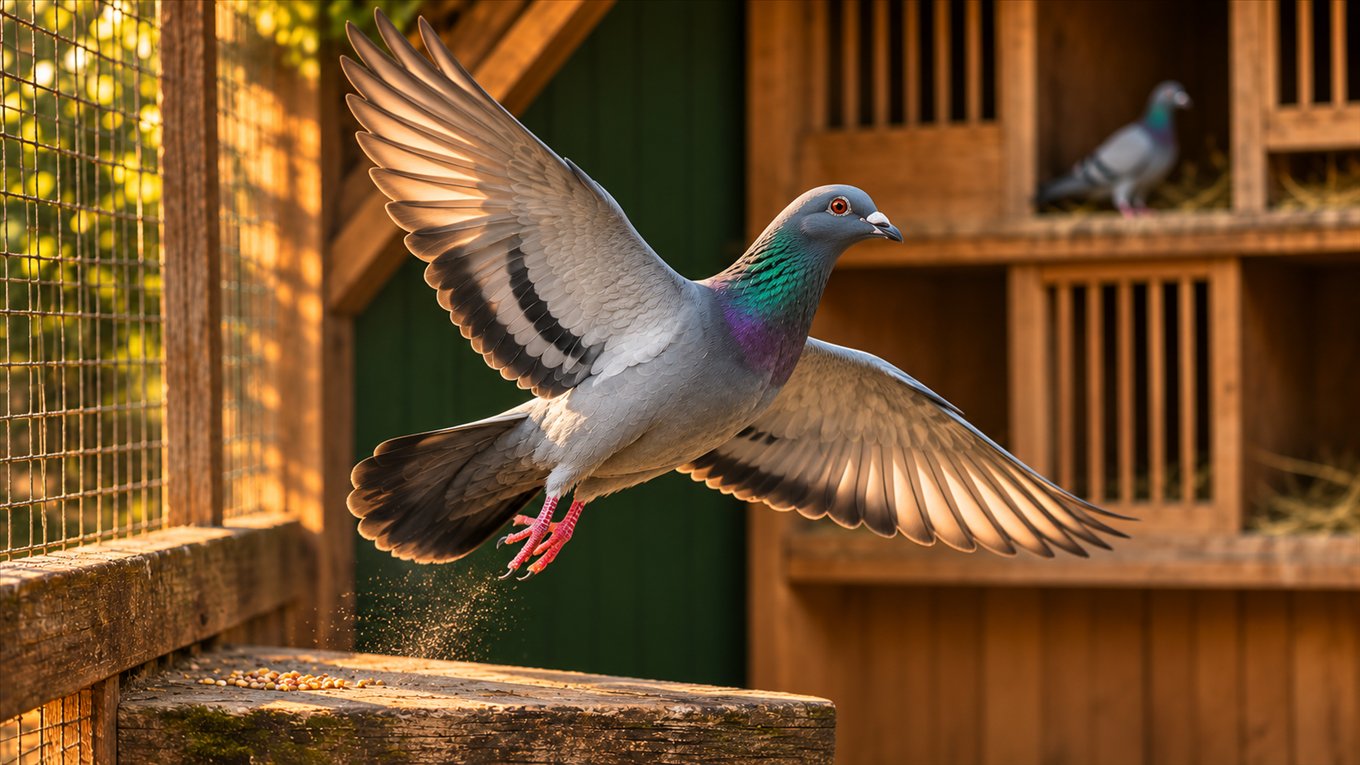
Preparation for racing begins before basketing day. Feeding, training, rest and observation of condition should form a coherent plan. No single mixture or timetable guarantees results for every loft. Daily work can nevertheless be organised so feeding decisions respond to the pigeons’ actual needs rather than habit alone.
Begin by assessing readiness
Before increasing workload, review each bird’s age, training history, appetite and condition. Pay particular attention to pigeons returning to activity after a break. Being housed together does not mean every bird is at the same stage.
Organise feeding responsibilities too. Who measures portions and records changes? How are bags identified? Will stocks cover the planned period? These arrangements do not replace nutritional knowledge, but reduce mistakes that make a programme difficult to evaluate. A veterinarian should assess fitness for exertion when a bird shows signs of illness.
Dietary balance matters more than one ingredient
Flight requires energy, and a pigeon uses different metabolic resources. Research shows that the use of fats, carbohydrates and proteins depends, among other things, on the time since feeding. This does not provide a simple instruction to fast pigeons before a race: an experiment is not a ready-made loft management plan. Source: Gannes, Hatch and Pinshow, How does time since feeding affect the fuels pigeons use during flight?.
Consider the whole diet rather than simply increasing one grain. Research comparing diets with different metabolisable energy levels in training pigeons also indicates the relevance of energy supply to nutrient utilisation. The findings concern particular experimental conditions and do not justify applying one value to every flock. Source: Li and colleagues, 2025.
Match the programme to racing intensity
Lighter training and initial workloads
Record not just distance but activity duration and intervals between training sessions. Establish a baseline: current mixture, portion and usual appetite. Date each adjustment so you can identify what actually changed.
Do not compare two weeks solely by the name of the feed used. Different training, weather or rest periods complicate the comparison. Collect specific observations rather than rushing to decide whether a feed “works”.
Longer distances and marathons
The more demanding the plan, the more carefully you should consider the mixture’s stated use. This does not automatically mean feeding larger portions every day. Consider the birds’ condition and the stage of the programme intended by the manufacturer.
One example is Prestige S Grains – Widowhood Marathon / Extreme Energy. Its product page identifies use in preparing pigeons flown on the widowhood system for long-distance and marathon races. This is a declared application, not a guarantee of speed, endurance or a competition placing.
Before a race: planning and consistency
Before basketing, check that the feeding plan matches the current schedule. If the race date changes, record it and reassess the plan with the person responsible for feeding. Do not try to compensate for inadequate preparation by suddenly introducing many new products.
Use a short checklist: correct bag and mixture code, planned portion, water access, observation of feeding and the person responsible. This is particularly useful when handing care to someone else. We do not prescribe one universal interval between feeding and release; this requires adaptation to the event and the birds.
After return: observation, water and rest
Returning from a race is a time to assess the pigeons, as well as record the result. Observe behaviour, undisturbed access to drinkers and feeders, and readiness to eat. Do not automatically attribute unusual weakness, injury or persistent loss of appetite to a “hard race”. These signs may require professional assessment.
Fresh water remains fundamental, alongside monitoring actual feed intake. Carefully choosing a mixture achieves little if some birds cannot calmly access basic resources. Source: VCA, Feeding Pigeons and Doves.
Returning to feeding and training
Separate the return day, subsequent rest days and the next workload in your notes. Premium Diet / Easy to Digest is described in the store as intended for lighter feeding, including after races and during rest. Its use should follow the whole programme. We do not present it as treatment for dehydration or a means of immediate recovery.
Keep a simple season record
Use one diary rather than several inconsistent plans. After each stage, record the feed’s name and code, feeding changes, training and observations after return. Separate facts from interpretations: “part of the portion remained” is more specific than “the feed does not suit them”. Keep batch information when buying another bag.
Prestige S Grains offers mixtures with different declared uses, which you can compare in the pigeon feed category. Choose them according to the breeding stage and activity plan. Consistent feeding, rest and observation underpin preparation; no product name can replace that daily work.